


信頼できるグローバルな化学薬品・原料サプライヤー。Leafchemは、顧客満足へのコミットメントに基づき、国際的なバイヤーと高品質な化粧品、食品添加物、植物エキスを繋ぎます。
サラ・M.

伝言を残す
弊社の製品にご興味があり、詳細を知りたい場合は、こちらにメッセージを残してください。できるだけ早く返信いたします。


Author
Polyvinylpyrrolidone is one of the quiet workhorses of personal care. It rarely appears in a marketing story, yet it holds hair in place, keeps mascara on the lashes through a working day, and helps an inorganic sunscreen stay evenly dispersed in a lotion. Among the many viscosity grades on the market, K30 is the one most often specified. This article explains what PVP K30 is, what the K value actually describes, where the material earns its place in a formula, and which practical limits formulators should plan for.
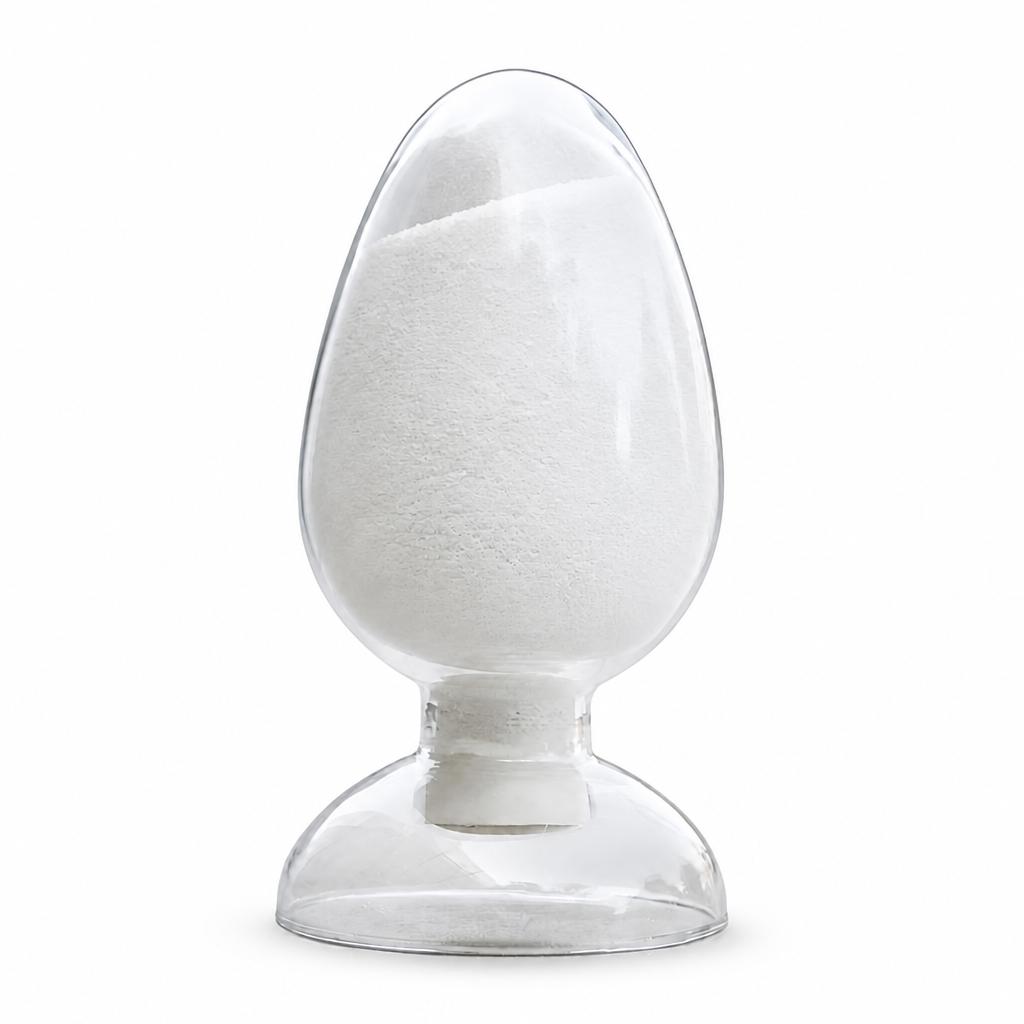
PVP K30 is polyvinylpyrrolidone of the K30 viscosity grade (CAS 9003-39-8), a linear polymer built from N-vinylpyrrolidone units and listed in cosmetic ingredient dictionaries under the INCI name PVP. It is supplied as a white, free-flowing powder that dissolves in water and in many polar solvents, dries to a clear film, and remains compatible with the surfactants, emollients and pigments used in everyday personal-care systems.
The number after the K is not a purity figure and not a molecular weight. It is the K value, an index calculated from the relative viscosity of a 1% solution using the Fikentscher equation. Because PVP is a polymer with a distribution of chain lengths rather than a single molecule, the K value is the industry's practical shorthand for the molecular-weight range of a grade, and it is the parameter that predicts how the material will behave on the bench.
For K30 the specified range is 27–32; the batch reported in our certificate of analysis measured 28.02. That position in the middle of the PVP range is what makes the grade so widely used. It forms a coherent film with enough strength for hold and pigment binding, yet it disperses and dissolves far more easily than the high-viscosity grades used where maximum hold is the only priority.
|
Grade |
K value range |
Behaviour |
Typical role |
|
K15 / K17 |
Lower |
Low viscosity, light film, easy to dissolve |
Light setting lotions, fine emulsions, sprayable systems |
|
K30 |
27–32 |
Medium viscosity, balanced film strength and handling |
Hair styling, mascara, pigment binding, sun care dispersion |
|
K90 |
Higher |
High viscosity, strong hold, slower to hydrate |
Maximum-hold gels and pomades, adhesive films |

The same property set is read differently by each category. In hair care the film is the product; in skin care it is a supporting player; in colour cosmetics it is mostly about wear and dispersion.
|
Application |
Function of PVP K30 |
Products |
|
Hair styling |
Hold, adhesion, humidity-set film, restyling with water |
Gels, mousses, setting lotions, pump and aerosol sprays, pomades |
|
Skin care |
Light film former, slip and spreadability, texture |
Serums, lotions, gels, masks, patches, peel-off products |
|
Sun care |
Dispersion of inorganic filters, film for water resistance |
Creams, lotions, sprays, beach and sport formats |
|
Colour cosmetics |
Film former, binder, pigment dispersant |
Mascara, liquid eyeliner, pressed powders, long-wear lip products |
|
Oral care |
Binder and consistency control where permitted |
Toothpastes and oral gels |
Hair fixatives are the largest single use. PVP K30 supplies hold without the crisp, brittle feel of a pure resin film, and because the film is water-soluble the style can be reset with a damp comb. In aerosol and pump sprays it contributes fast drying and a non-tacky finish; in gels and mousses it adds body and reduces the flaking that appears when a formula relies only on a high-K grade.
In sun care, the polymer does two jobs. It helps disperse inorganic filters so that agglomerates break down and the lotion stays uniform, and the film it leaves supports water resistance when paired with hydrophobic film formers. Because it is non-ionic it does not disturb the emulsifier balance of the system, which keeps reformulation simple when an SPF line is extended.
Mascara and liquid eyeliner depend on a film former for wear and smudge resistance, and PVP K30 is a standard part of that blend. In pressed powders it acts as a binder that improves payout and reduces dusting, while in emulsions and gels it keeps pigment dispersed so that colour develops evenly.
Because PVP is a commodity polymer available from many sources, the specification and the documentation are what separate one supplier from another. The certificate of analysis is the document to read closely.
|
Parameter |
Why it matters |
Typical requirement |
|
K value |
Sets viscosity, film strength and hold |
27–32 |
|
N-vinylpyrrolidone |
Residual monomer control for skin-contact products |
≤ 0.2% |
|
Moisture |
Free-flowing behaviour and weighing accuracy |
≤ 5.0% |
|
pH (5% solution) |
Interference with the pH of the finished formula |
3–7 |
|
Residue on ignition |
Non-volatile impurities |
≤ 0.1% |
|
Heavy metals |
Impurity control for cosmetic use |
≤ 10 ppm |
|
Acetaldehyde / hydrazine |
Trace by-products from manufacture |
≤ 0.05% / ≤ 1 ppm |
Ask for a lot-specific certificate rather than a generic specification sheet, and check that the values reported sit inside the limits rather than merely repeating them. Beyond the certificate, confirm the pharmacopoeial edition the testing refers to, the packaging format, and whether the supplier can hold the same specification across repeat orders.

PVP K30 is a synthetic polymer. It is not a natural-origin ingredient and does not count towards a natural-origin index under ISO 16128, so a brand building a clean-label story cannot use it as evidence of natural content. It is water-soluble rather than a solid plastic particle, but it is still a synthetic polymer and should be assessed against the brand's own polymer policy and any local reporting requirements for the market where the product is sold.
On the regulatory side, PVP appears in the EU CosIng inventory and in China's inventory of cosmetic ingredients already in use, and it is not restricted as a film former. That does not remove the need to confirm the current listing, any conditions of use and the notification obligations of each destination market before launch, particularly where a product moves between the EU, the United States and Asia.
The material also carries no preservative or biological action. It should not be presented as an active ingredient; its contribution is physical, and claims built around it should stay physical as well.
PVP K30 earns its place in cosmetics by doing ordinary things reliably. It forms a clear, adhesive film, dissolves without fuss in water and polar solvents, disperses pigment, and leaves the emulsifier system of a formula undisturbed. The K value of 27–32 is the balance point that lets one grade serve hair styling, sun care and colour cosmetics without the handling penalties of a high-viscosity polymer.
The constraints are equally clear: the film is hygroscopic, the material is synthetic in origin, and performance depends on dissolving it properly rather than on the number on the label. Formulators who plan for those three points get a workhorse that behaves the same way batch after batch.
Leafchem supplies PVP K30 in pharma grade with a K value of 27–32, a batch-specific COA covering the full pharmacopoeial panel, and a minimum order quantity of 500 kg. Safety data sheets, technical data sheets and testing to the pharmacopoeial edition required for your market are available on request. To discuss your formulation or request a sample, contact our technical team.


伝言を残す
 IPv6ネットワークをサポート